
Selim Karaosmanoğlu, Senior Ambassador, (ret.)
It is widely accepted that Iraq’s immense richness in fossil resources, together with its geostrategic location that provides Turkiye with seamless access to the Gulf region and the Arabian Peninsula. Furthermore, Iraq’s unique demographic and social structures also carry major significance for Turkiye. Nevertheless, despite this general assessment, when the past half a century is examined from an objective and critical perspective, it becomes evident that political authorities in Ankara have often failed to sustain a long-term and effective policy toward Iraq as a whole, at times acting under ideological impulses, and at other times under the influence of specific interest groups.
To give concrete examples from recent decades, although official narrative and policy documents have consistently emphasized “the political unity of Iraq, the inviolability of its borders, and its sovereignty over its territory,” we do not intend to accuse the practical policy approach of directly contradicting these principles. At the same time, the negative environment created in Iraq by Saddam Hussein, who was responsible for the First and Second Gulf Wars and their consequences, cannot, naturally, be ignored.
This article will neither address in detail certain issues, such as the internal divisions among our kinsmen in Iraq, who, rather than being referred to as “Iraqi Turks”, who are defined as “Iraqi Turkmen,” a constitutional designation inherited from the period of British colonial rule. Nor will it focus on the decline in their political effectiveness within the Iraqi legislative sphere, resulting from sectarian divisions among themselves, and from misguided external interventions that have resulted adverse in-house political coalitions.
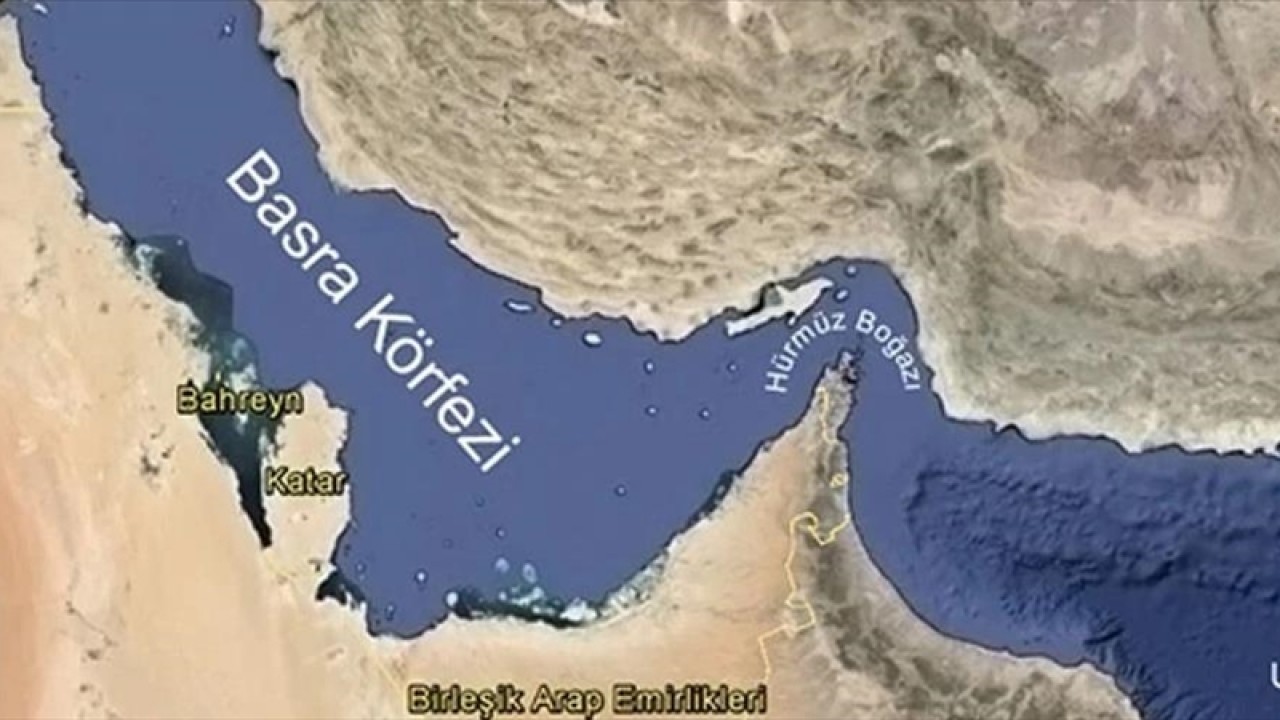
The large-scale attack by a U.S.–Israeli coalition against Iran, and Iran’s broad reaction to it, has transformed the conflict from a regional confrontation into one that is increasingly taking on a global character. As a matter of fact, the Strait of Hormuz turned into “Strait of Threat” as a global hotbed of insecurity. These unfavorable circumstances, if managed correctly in a timely manner, paradoxically create favorable alternative conditions, thus the risk turning into an opportunity for Ankara and Baghdad through Iraq itself. Essentially this issue has been on Turkey`s agenda for quite some time
On the basis of a win–win principle for both Turkey and Iraq, an urgent energy corridor should be established between the Basra region and the İskenderun/Mersin basin through the rational use of existing pipelines and other overland infrastructure. In fact, Iraq’s Minister of Oil, Hayan Abdulghani, has made a similar assessment and, within a two-stage framework, signed a protocol with the Kurdistan Regional Government (KRG), thereby enabling a certain volume of crude oil, whose contested legal status had prevented pumping since 2014, to be transported through the Kirkuk–Ceyhan/Yumurtalık pipeline to terminals in Turkiye. (1)
In addition to this immediate oil export measure, the Iraqi Minister of Oil has also announced that, as a second phase, instructions have been issued for the rapid construction of a new, 100-kilometre connection line that would bypass the section of the Kirkuk–Ceyhan/Yumurtalık pipeline currently under the de facto control of the KRG.
It appears that the political leadership in Baghdad aims to connect the three parallel pipelines, known as the “Strategic Pipeline,” which begin at the Basra terminals and extend to Haditha in Anbar Province, to the Kirkuk–Ceyhan/Yumurtalık pipeline in order to ensure direct, uninterrupted, and secure access to the Mediterranean. It is also conceivable that this supply line is being planned with the significant LNG resources in Rumaila and Zubayr then onwards (currently operated by the state-owned Basra Gas Company). In this way, Iraq would be able to reach the Mediterranean directly, without relying either on the Gulf or on alternative routes such as the Aqaba corridor toward the Red Sea proposed or suggested by certain Arab countries. (2)
The fundamental principle of Turkiye’s established foreign policy has been based on creating a stable and secure neighborhood. For this reason, it would be a mistake to confine the issue solely to the secure transportation of oil, gas, and their derivatives. Iraq should instead be approached through a broader strategic perspective, similar to the approaches adopted in the South Caucasus and the Black Sea basin, and within a multi-layered vision. Taking global economic preferences into account, it would be appropriate to approach the issue through the principle of an “uninterrupted supply chain.” In this context, the long-proposed opening of a second border crossing with Iraq via Ovaköy, parallel to the pipeline routes, should finally be implemented, and the railway line should be extended from Nusaybin through Cizre directly into Iraq.
With regards to this matter, a significant step has finally been taken. Following the initiative of Turkish government, and in the presence of President Erdoğan, a Memorandum of Understanding entitled the “Development Road Project” was signed in Baghdad on 23 March 2024 between Turkiye, Iraq, Qatar, and the United Arab Emirates (3). According to the official statement, the project envisages the creation of a logistics route linking the Gulf region directly to Europe, without reliance on the Suez Canal, through a 1,200-kilometre railway and highway network starting from Iraq’s Basra/Faw port and extending to Ovaköy in Turkiye. The estimated cost of the project has been stated to be 20 billion US dollars and learned that a company operating in Dubai has been tasked with carrying out the preliminary feasibility study. (4) Without doubt, this represents an important kick-start.
However, the role of Turkiye, positioned as the main artery, terminal hub, and what is referred to in international terminology, as the “midstream” actor, has not been clearly defined within the project yet. Issues such as the joint terminal basin of İskenderun and Mersin, the identification of critical underground transit points beneath the Bosporus, the status of possible strategic partnerships with third countries, and, perhaps most importantly, the determination of Iraq’s internal transport network connections all require the active involvement and views of our country.
It is also important that the project be given a national and domestic character, through the incorporation of Turkey’s strategic vision. In the current regional and even global environment, the project represents a highly significant opportunity not only for Turkiye and Iraq but also for littoral GCC countries in terms of effective integration and interdependence.
_________________________________________________________________
(1) Under the coordination of Iraq’s state oil marketing company, SOMO, it has been decided, in the initial phase, to inject 180,000–190,000 barrels per day into the pipeline, while allocating 50,000 barrels for the domestic consumption of the Kurdistan Regional Government (KRG) of Iraq.
(2 Egypt, Libya, and Algeria export their products directly to Europe via the Mediterranean.
(3) Bulletin of the Presidency of the Republic of Türkiye Department of Communications, dated 23 March 2024.
(4) F.A.G.-L.L.C., a Swiss-based firm specialized in finance, consultancy, and strategic partnerships.
20 March 2026 S.K.